

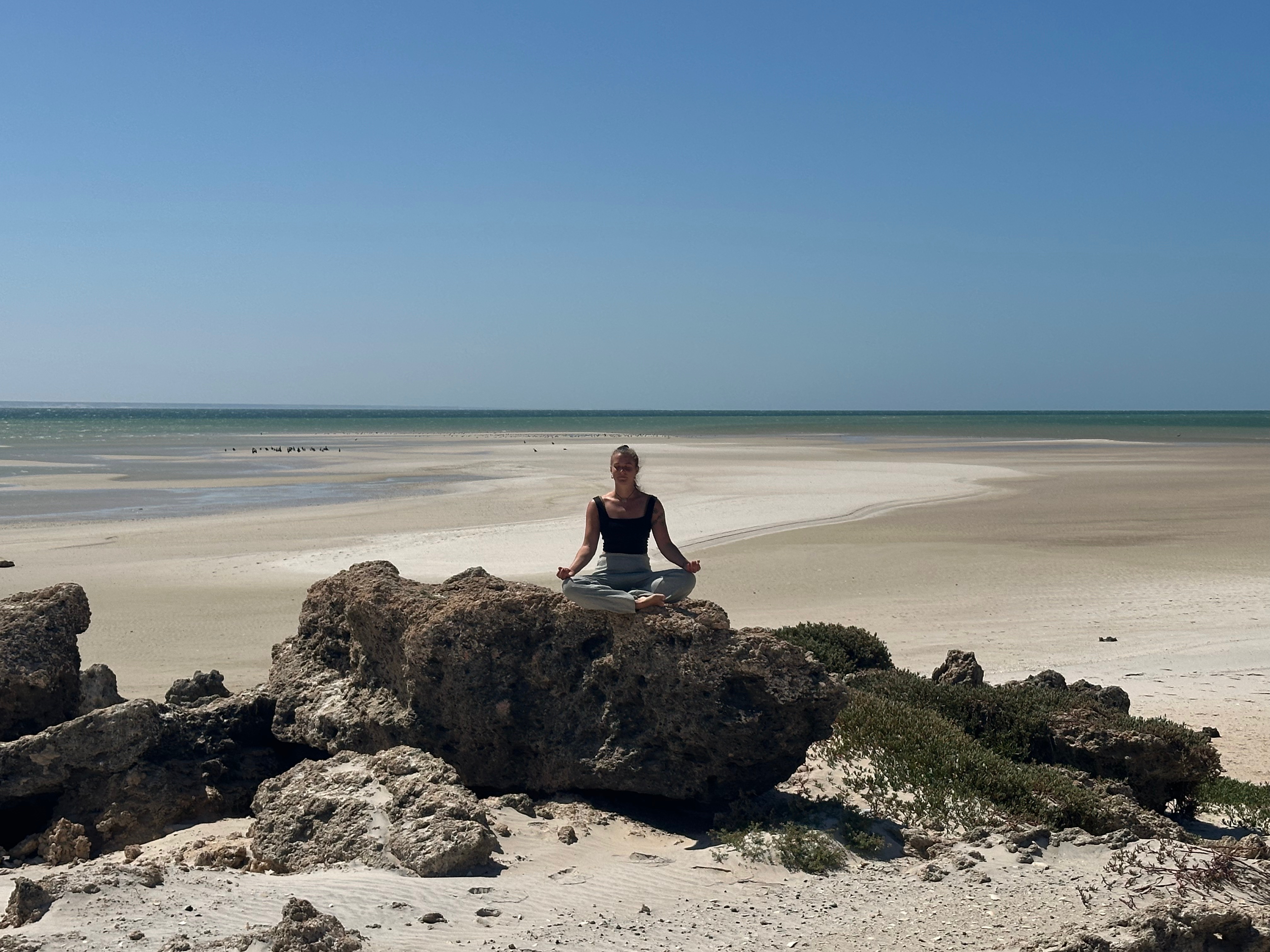
Inhale. Pause. Exhale. Pause.
Sounds simple, right? And yet, this seemingly effortless breath pattern holds profound power in itself. Box breathing, also called square breathing, may sound modern, but it has roots in ancient Vedic practices. Long before it became a tool for stress management in corporate offices or high-pressure military settings, this breathwork technique was part of yogic tradition and was used to center the mind, regulate prana, and invite deep presence.
Today, Navy SEALs use it to maintain composure during combat. CEOs use it before important decisions. And yogis? We’ve always known that the Breath is the gateway to bliss.
Whether you're on your mat, in the boardroom, or stuck in traffic, box breathing can regulate your nervous system, sharpen your focus, and bring you back to your center. Let's explore what makes this ancient-modern technique so effective and why it's becoming a favorite for everyone from spiritual seekers to stress-ridden professionals.
Box breathing, also known as **square breathing**, is a **simple relaxation technique** that can help calm your nervous system and reduce stress. It involves a **four-count breathing pattern**: 1. **Inhale** for a count of four. 2. **Hold your breath** for a count of four. 3. **Exhale** for a count of four. 4. **Hold your breath** again for a count of four. This cycle is repeated several times. The visual of a square or box is used to help remember the four equal counts. It's often used in military and other high-stress professions to help individuals regain composure and focus.
Box breathing is a four-part breath cycle:
- Breathe in for 4 seconds
- Hold for 4 seconds
- Exhale for 4 seconds
- Hold for 4 seconds
Each side of the “box” is equal, creating rhythmic symmetry that calms both body and mind. You can practice it for just a few minutes or extend it into longer sessions. The beauty? You need nothing but your breath. This technique is beloved because it’s accessible and effective. In a yoga class, during meditation, at your desk, or before bed, box breathing meets you where you are.
Ancient wisdom meets modern science
From a yogic perspective, box breathing resembles retention-based pranayama practices like Sama Vritti. These techniques balance the flow of prana (life force) and bring equanimity to the mind. But the interesting part is that modern science agrees on that. Box breathing activates the parasympathetic nervous system, bringing the body into its “rest and digest” state. What is it good for? A slower heart rate, reduced blood pressure, improved heart rate variability, and a calmer mind. It balances the central nervous system and supports overall autonomic regulation.
More specifically, regular practice of box breathing has been shown to:
- Balance the central nervous system Box breathing modulates the interaction between the sympathetic and parasympathetic branches of the autonomic nervous system, helping shift from a stress-dominant state into calm presence.
- Improve heart rate variability (HRV): HRV is a marker of resilience and adaptability. Higher HRV is associated with better physical and mental health. Box breathing improves HRV by engaging the vagus nerve, a key player in nervous system regulation.
- Regulate cortisol levels: Studies have shown that slow breathing can help reduce the secretion of cortisol, the stress hormone, and create a physiological shift toward balance.
- Synchronize breathing and heart rhythms This coherent state is deeply relaxing and restorative for the whole body.
Ancient yogis knew it. And today's science proves it.
A study in Cell Reports Medicine found that just 5 minutes of slow breathing exercises (including box breathing) were more effective in reducing anxiety and improving mood than mindfulness meditation alone.
Research from Harvard Medical School and the American Heart Association highlights that practices like box breathing can improve heart rate variability (HRV), a key indicator of heart health and resilience to stress.
Why yogis (and everyone else) should love it
In yoga, breath is everything. It bridges the seen and unseen, body and spirit. Box breathing offers a modern approach to an age-old principle. Control the breath and you calm the mind.
But this practice isn't just for seasoned yogis. It's for anyone:
- Are you a parent needing a little break?
- Before an important exam, you need to relax and focus?
- Are you a nurse who works long shifts?
- You need to be creative, but you're stuck in doubt?
Quick benefits:
- Calms anxiety and stress
- Improves sleep and emotional regulation
- Boosts focus and decision-making
- Grounds you before meditation or yoga
- Enhances awareness of your body and energy.
- Balances the central nervous system by engaging the vagus nerve and shifting you into the parasympathetic state
- Improves heart rate variability and supports long-term cardiovascular health
To all yoga teachers, box breathing is also a wonderful way to open or close a class, helping students transition with clarity and calm.
"Box breathing, also known as Sama Vritti pranayama, is a simple yet effective breathing technique that can help calm the mind and reduce stress. It's called "box breathing" because each phase of the breath lasts for the same count, creating a visual of a box. Here's how to practice it: 1. **Find a comfortable position:** Sit or lie down in a relaxed position. You can close your eyes if that helps you focus. 2. **Inhale slowly:** Gently inhale through your nose for a count of four. Feel your belly rise as you fill your lungs with air. 3. **Hold your breath:** Hold your breath in for a count of four. Keep your chest and abdomen still. 4. **Exhale slowly:** Gently exhale through your mouth or nose for a count of four. Feel your belly fall as you release the air. 5. **Hold your breath again:** Hold your breath out for a count of four. 6. **Repeat:** Continue this cycle of inhaling, holding, exhaling, and holding for several minutes. Aim for 3-5 minutes to start, and you can gradually increase the duration as you become more comfortable. **Tips for effective box breathing:** * **Focus on your breath:** Try to keep your mind from wandering. If your thoughts drift, gently bring your attention back to the counting and the sensation of your breath. * **Don't force it:** The counts should feel natural and comfortable. If a count of four feels too long or too short, adjust it to a number that works for you (like 3 or 5). The key is to keep all four phases equal. * **Be consistent:** Practicing box breathing regularly, even for short periods, can yield the best results. Try incorporating it into your daily routine, perhaps in the morning, before bed, or whenever you feel stressed. * **Listen to your body:** If you feel lightheaded or uncomfortable at any point, stop and return to normal breathing. Box breathing can be a powerful tool for managing anxiety, improving focus, and promoting overall well-being."
Here’s how to try it right now:
- Sit comfortably with a straight spine or lie down.
- Inhale through your nose for 4 counts.
- Hold for 4 counts.
- Exhale slowly through your nose for 4 counts.
- Hold for 4 counts.
Repeat this cycle 4-6 times to start. Notice any changes. Feel your body soften. Watch your mind settle. If 4 counts is too easy, change the rhythm to 6-6-6-6 or 8-8-8-8.
Over time, box breathing becomes second nature. A breath-based refuge in moments of pressure, fatigue, or emotional intensity.
More than a practice – A portal back to you
I often begin and end sessions with breath. Because healing doesn’t always come through doing more. Often, it comes from doing less, slowing down, tuning in, and reconnecting with what’s already inside us.
Box breathing is more than a tool. It’s a ritual. A quiet revolution in how you meet your day.
You don't have to escape life to feel calm. You just need four simple counts.
Final thoughts
Whether you’re overwhelmed, disconnected, or simply curious, box breathing is a sacred pause waiting to meet you. From ancient yogic roots to neuroscience labs to the mat beneath your feet, this technique reminds us that true power begins with presence.
Try it. Let your breath guide you home.
Want to explore more healing breathwork?
Join us at one of our YOUnique Retreats or YOUnique Workshops, where we use the breath not only to calm the mind but to return to your deepest truth.
Let your breath lead the way.

 English